

A medical school had been part of the University’s vision since its founding, but financial limitations delayed the creation of a full campus-based medical center. Prior to establishing its own facilities, the University partnered with Rush Medical College beginning in 1898.
During the late 1920s and early 1930s, the University rapidly expanded its medical campus through the establishment of a series of new hospitals and research facilities financed largely by transformational gifts from Chicago philanthropists. With this expansion, the University emerged as a nationally recognized academic medical center.
As the field of medicine transformed, and new needs and standards for care emerged, interior spaces in these buildings transformed as well, often in ways that students, teachers, and physicians could never have imagined in the 1920s.

Albert Merritt Billings Hospital opened on October 3, 1927, becoming the first medical facility on the University of Chicago campus. Initially housing 215 beds and the departments of Medicine and Surgery, the hospital quickly expanded its programs and facilities. Its opening allowed medical students to complete all four years of training on campus, including clinical education, ending the University’s longstanding reliance on Rush Medical College.

With the opening of the Center for Care and Discovery in 2013, Billings shifted to a supporting role. The building remains an active part of UChicago Medicine’s academic medical center, supporting patient care while bringing physicians, researchers, and trainees together. Its clinical, administrative, and laboratory spaces contribute to the diagnosis and treatment of patients and support clinical research that helps translate scientific discoveries into advances in care.

The Chicago Lying-In Hospital opened in 1931, part of the vision of Joseph Bolivar DeLee, MD, a transformational figure in early modern obstetrics. He championed a dedicated maternity hospital and a center for obstetrics education and research and was featured on the cover of Time magazine in 1936. His innovations, including introducing hygienic standards during childbirth, drastically decreased maternal and infant mortality.

The Chicago Lying-In Hospital building now houses the Departments of Obstetrics & Gynecology, Dermatology, and Emergency Medicine. Obstetric care has moved to the Family Birth Center within Comer Children’s Hospital. The Department of Obstetrics & Gynecology remains a leader in education, research, and innovative patient care, building on the Chicago Lying-In Hospital’s longstanding legacy in women’s health.

Goldblatt Pavilion opened in 1961, physically linking the Chicago Lying-In Hospital to the rest of the medical campus. Funded largely by philanthropist Maurice Goldblatt, the building served as the headquarters for outpatient services, patient admissions, laboratory space, and radiology services.

Goldblatt Pavilion remains a major entrance and connector within the medical campus, linking multiple hospital and clinical facilities and serving patients, visitors, faculty, and staff. Beyond its role as a gateway to UChicago Medicine, the building continues to support clinical care, research, and education.

Abbott Memorial Hall opened in 1927. It housed the departments of physiology, physiological chemistry, and pharmacology. In 1940, it was renamed in honor of Clara Augusta Abbott and her husband, Wallace C. Abbott, founder of Abbott Laboratories.

Today it is home to the University of Chicago Neuroscience Institute and the Graduate Medical Education Office. The building continues the scientific mission established by its earliest occupants, supporting research into the nervous system, neurological disease, and brain function while helping train the next generation of scientists and physicians.
.
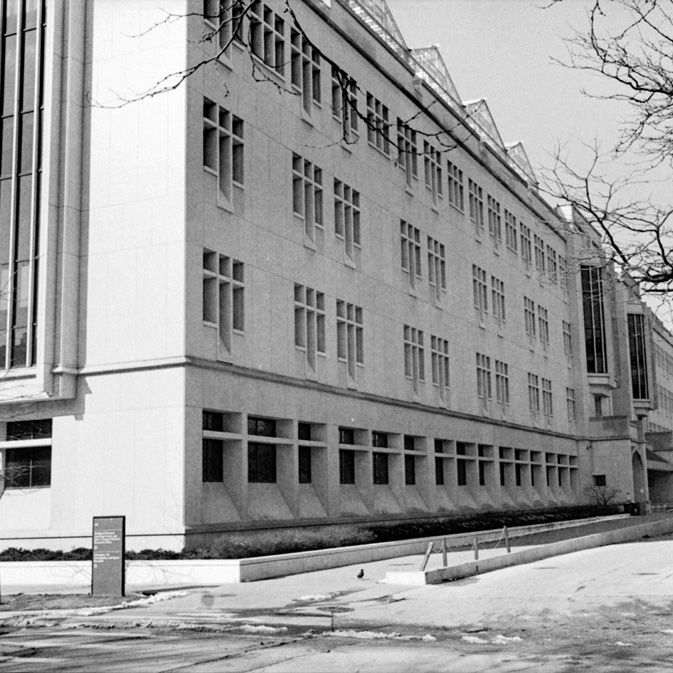
A $12 million gift from the Pritzker family in 1968 led to the medical school’s formal naming as the Pritzker School of Medicine. In 1993, the Biological Sciences Learning Center opened as a dedicated home for medical students, bringing research, teaching, classrooms, and laboratories together in one place. The building was renamed Donnelley Hall in 1998 in recognition of a generous gift from the Gaylord and Dorothy Donnelley Foundation.

The space is still home to the Pritzker School of Medicine and provides facilities for MD/PhD students in the Medical Scientist Training Program. This program combines medical and graduate education, preparing physician-scientists to pursue research that advances understanding of human disease while maintaining clinical training.